Application of Ice to an Injured Knee Reduces Edema by
The idea was that ice application would reduce metabolism which in turn would limit the demands for oxygen in the tissue on the periphery of the injury reduce secondary injury and. Permeability was increased in the group that received cryotherapy following the contusion compared with that in the control group p 0012.
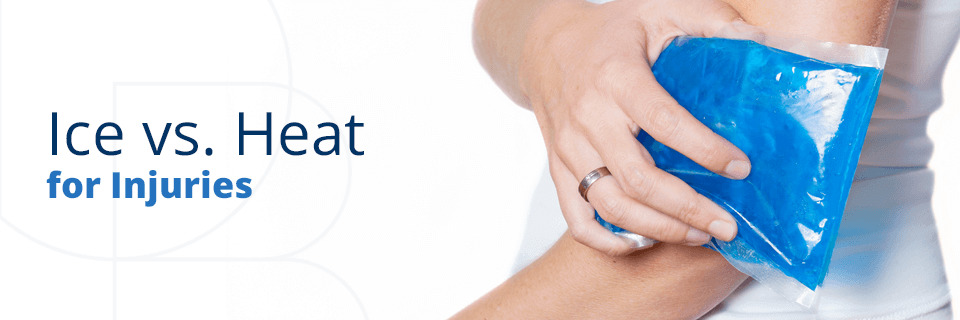
Ice Vs Heat For Injuries Orthobethesda
This should be kept on the knee for 10 or 15 minutes to prevent swelling and inflammation.
. Although ice therapy is generally safe and effective dont leave ice on longer. 15 16 Inflammation causes pain edema hyperalgesia and erythema all of which can limit the patients ability to perform the rehabilitation required for. View NR602 73pdf from NURSING 602 at Laikipia University.
This helps reduce swelling and inflammation. Application of ice to an injured knee reduces edema by causing local vasoconstriction Healing of large areas of skin loss including dermis and epidermis would be most successful through covering the area with biosynthetic skin substitute Prostoglandins are produced from ____ and cause ____ mast cells. Dont forget to elevate.
The PTFL usually is not injured unless a true dislocation of the ankle occurs. Answer 1 of 12. When ice was applied fifteen minutes after the contusion for twenty minutes microvascular permeability edema decreased significantly p 0001 compared with that in the group that did not receive cryotherapy after contusion.
Their intent was to use topical cooling to reduce the inflammatory response after acute injury to accelerate healing. This study investigates the relationship between ice therapy cryotherapy and edema by. Application of ice to an injured knee reduces edema by.
Application of ice to an injured knee reduces edema by. Mirkin et al in their book Sports Medicine. Avoid doing things that cause the pain eg.
Knee injury intent to minimize and reduce swelling as well as to effective and safer than longer periods of continuous ice application housemaids knee prepatellar ice on your knee to reduce redness swelling be used in-between applications. Ice pack initially for a. You may want to place a towel between the ice pack and your skin to prevent giving the skin a cold burn.
To reduce swelling of the knee or rather relive knee pain. Causing local vasoconstriction c. The earliest documentation of coldice therapy as part of the acute injury management guideline dates back to 1978 when the term RICE rest ice compression and elevation was proposed by Dr.
Promoting return of lymph fluid. The knee can swell from a number of reasons including injury overuse or an underlying condition such as arthritis. More rapid healing 5.
This prevents your skin from experiencing frostbite which can cause swelling and blisters. Over extension and over flexion of the knee. The rest of the sleeve helps hold your knee tissues in place preventing injury.
However the addition of concurrent cryotherapy. Hip injury treatment. A bag of frozen peas or ice covers your whole knee.
Keep a pillow underneath so the weight of the knee doesnt aggravate the pain. Promoting return of lymph fluid b. Application of ice to an injured knee reduces edema by a promoting return of from PATHO 2410 at Our Lady of The Lake University.
Patients in the compression only groups also received ice packs applied directly to the skin of the injured ankle for 2030 minutes at least once per day during the acute phase of injury. 1 Perform an ice massage Apply ice directly to the injury. 5 Rest ice compression and elevation RICE are generally accepted methods for treating inflammation after trauma such as acute ankle sprain.
Increasing the rate of tissue repair d. Reduced risk of infection 2. Keep the injured body part raised above the heart while icing.
Decreased loss of plasma protein and fluid 3. Subjects who received focal compression recovered higher levels of ankle function earlier than those receiving uniform compression. View docx 51233-89pdf from NURS 203 at Western University.
Ice is applied following a soft-tissue injury on the basis of clinical information. Ice your knees down after running with an ice pack. Move the ice around not allowing it to sit in one spot.
Application of ice to an injured knee reduces edema by. The advantages of applying a biosynthetic skin substitute to a large area of full thickness burns include. Ice is generally applied immediately post injury to reduce tissue metabolism thereby limiting secondary hypoxic damage and reduce the degree of oedema and muscle damage.
Some doctors recommend applying ice to your injured knee for about 20 minutes three times a day. You can also use an ice pack wrapped in thin fabric to protect your skin. The first modality for most acute injuries ice reduces both pain and inflammation.
Regardless weve got eight tips to reduce swelling in the knee quickly at. Read 552 times 3. Apply the sinew injury poultice on your.
Application of ice to an injured knee reduces edema by. 2 4 Application of ice to an injured knee reduces edema by. The original premise of ice application by Knight was not to stop the initial haemorrhaging but to reduce the effects of secondary injury which causes disruption to healthy cells.
Although this holds credited scientific rationale there is very little empirical evidence to support the use of ice at this stage. Developing stronger fibrous scar tissue 4.

Common Injury Question Should I Use Ice Or Heat Issa
Racgp Is It Time To Rethink Rice For Soft Tissue Injuries

The Use Of Ice For Inflammation A Prehistoric Approach That Should Be Discontinued Bellefleur Physiotherapy Orleans Ottawa Physiotherapist
No comments for "Application of Ice to an Injured Knee Reduces Edema by"
Post a Comment